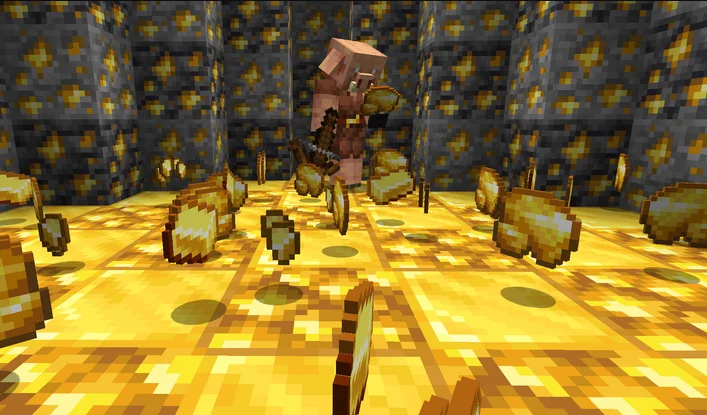
A gold farm is the first farm that pays for itself twice: it produces gold for piglin trading, and it produces the experience you need to enchant the gear that makes everything else faster. It is also, unusually for Minecraft, cheap — no redstone, no pistons, no mob-spawner hunting.
The design below is the small version: one pit, one hopper floor, one aggro trigger. It works because of a single mob behaviour quirk, and everything else in the build exists to exploit it safely.
What this farm actually pays#
Most guides skip this part, which is why people build a gold farm and then wonder whether it is working. Per zombie piglin killed, in the current version:
- Rotten flesh — 50% chance of one, so 0.5 per kill on average
- Gold nugget — 50% chance of one, so 0.5 per kill on average
- Gold ingot — 2.5% chance, and only if a player or tamed wolf lands the killing blow
- Experience — 5 points, or 12 if it was a baby
Nine nuggets make one ingot, so the nugget stream alone is about one ingot per 18 kills. Add the direct ingot drops and you land at roughly one ingot per 12 kills. A farm that clears a few hundred piglins an hour therefore produces somewhere in the region of twenty to thirty ingots — plus the flesh, which is worthless as food but useful for trading and compost.
The experience is the part people underestimate. At 5 points per kill, the same few hundred kills is over a thousand experience, which is most of a level 30 enchant.
Why the farm works#
Zombie piglins are neutral until you hit one. The important detail is what happens next: attacking one aggros the others in the area, and they pathfind toward you as a group. That turns a passive spawning platform into a conveyor belt, because every piglin that sees you walks in the same direction — toward the trapdoors over the kill chamber.
The second half of the trick is spawning. In the Nether, zombie piglins spawn at light level 11 or below, in groups of four, and the Nether wastes biome gives them by far the highest spawn weight of any Nether biome. Build away from other spawnable surfaces and almost every hostile spawn in the area is a piglin.
Two consequences follow, and both are visible in the build below:
- Babies are the danger. About 5% of spawns are baby piglins: they are faster, and their hitbox is small enough to fit through a one-block gap. That is why step 3 exists.
- Ghasts are the other danger. An open roof is an invitation, and a fireball into a wooden kill chamber ends the session. The roof in step 5 is not decoration.
Before you build: three checks#
1. Pick a dead spot. If your base is next to a fortress or a crimson forest, those spawns compete for the mob cap and dilute the farm. The best sites are flat Nether wastes with nothing else spawnable within about 30 blocks.
2. Check the mob cap. Hostile mobs despawn when they are far from you, but a farm near a busy area keeps the cap full of strangers. Standing still at the farm for a minute before triggering it helps.
3. Bring fire resistance. Not for the piglins — for the lava you will inevitably dig into while making the pit.
Materials#
This build only requires low-cost resources:
- 8 hoppers
- 4 chests
- 10 trapdoors
- 4 ladders
- About a stack of building blocks
- A bow, crossbow or trident to trigger the farm from safety
Step 1: Dig the base pit#

Dig a pit 3 blocks deep, 5 blocks long and 3 blocks wide. That is the whole footprint — the farm is small on purpose, because a small chamber concentrates the piglins where the hoppers can catch everything.
Step 2: Build the item collection system#
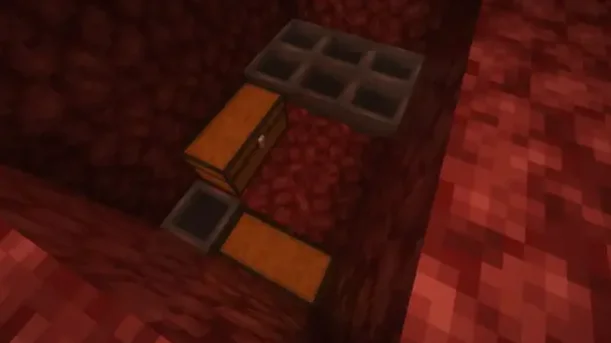
Drop into the pit and place a chest against one long side, then a second beside it to make a double chest. Add a second double chest on the floor nearby and connect the two with hoppers.
Then place six hoppers in a 2×3 grid feeding the main storage. This grid is the floor of the killing area: every drop lands on a hopper instead of the ground, so nothing despawns and nothing is left behind.
Step 3: Seal the lower hopper layer#
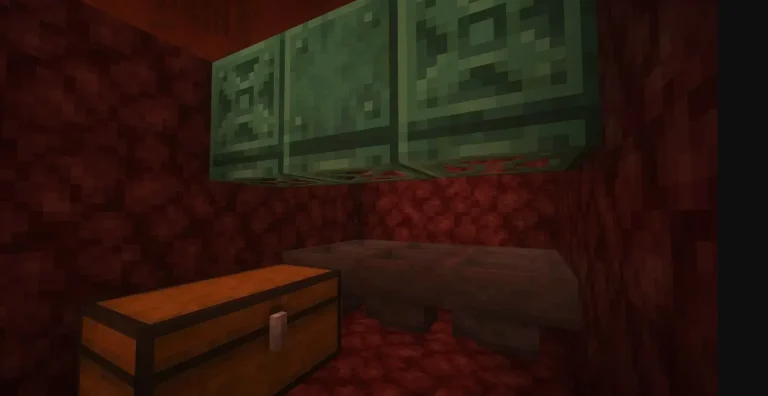
Place three solid blocks along the gap between the hoppers and the chests, then three trapdoors under those blocks. This is the anti-baby measure: the gap looks passable to a baby piglin, and closing it is cheaper than losing a session to one.
Step 4: Place the upper trapdoors#
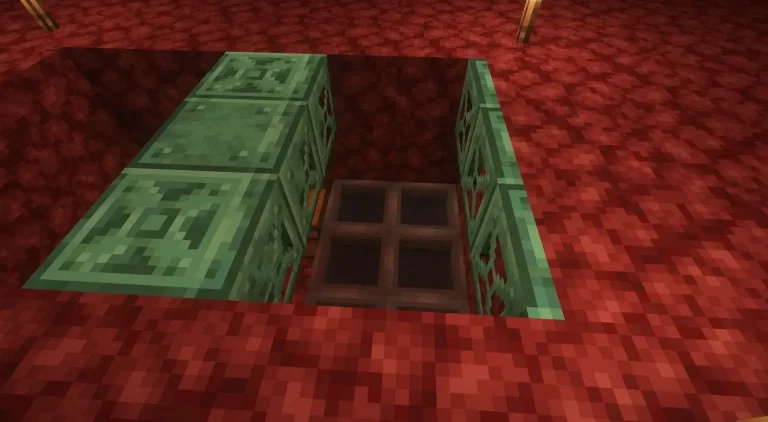
Dig a temporary staircase back to the surface. Place six open trapdoors directly above the 2×3 hopper platform, angled so they read as a floor. An aggroed piglin pathfinds toward you, treats the open trapdoors as walkable, and drops through.
This is the part that decides whether the farm works at all. Trapdoors flush with the ground, or one block too high, and the piglins stand on the edge staring at you instead of falling.
Step 5: Enclose the killing chamber#
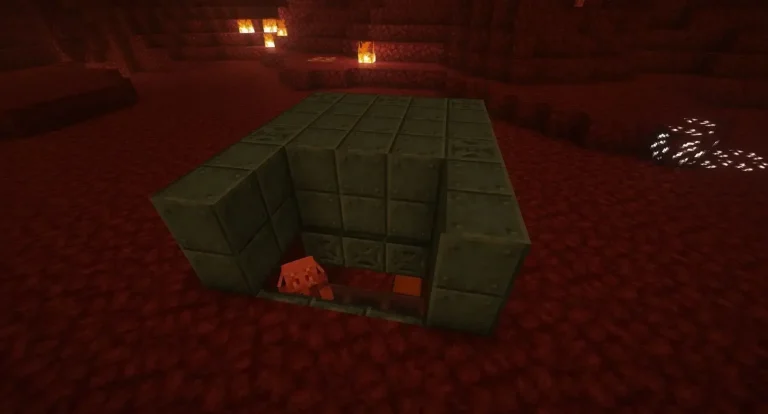
Wall and roof the chamber, leaving the trapdoor side fully open so piglins can fall in. Add a dividing wall in the middle: it keeps mobs from crowding your position and stops a bad swing from pulling a whole wave onto you.
The roof does double duty — it blocks ghast line of sight, which is the single most common way these farms get destroyed.
Step 6: Add an access passage#
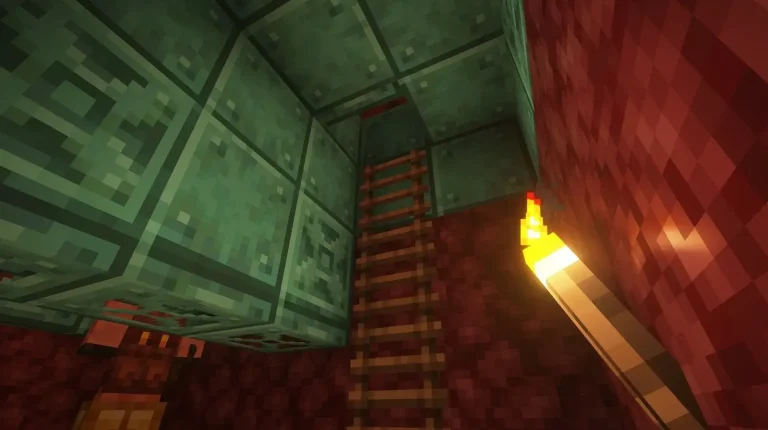
Before sealing the roof, put a ladder inside the chamber for entry and exit, and cap the top with a trapdoor. Without the cap, the ladder is a hole in a mob-proof roof.
Step 7: Activate the farm#
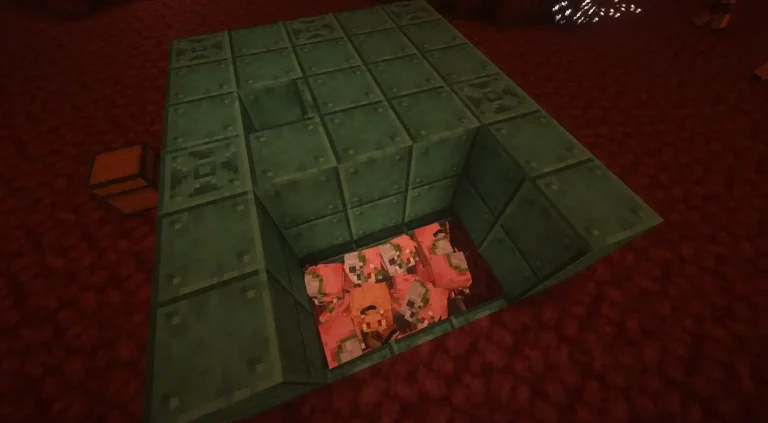
Provoke one piglin from a distance with a bow, crossbow or trident — or hit one in melee and retreat immediately. The wave follows, falls through the trapdoors, and lands in front of you.
Then the counter-intuitive part: kill slowly. Every piglin you kill frees a mob-cap slot for another spawn, but if you clear the chamber instantly you spend most of your time waiting with an empty floor. A steady pace keeps the chamber populated and the drops flowing.
Three upgrades worth doing later#
Looting III. It changes the nugget and flesh amounts dramatically — the ingot chance only moves from 2.5% to 5.5%, but nuggets go from 0.5 to about 2 per kill. The nugget stream is where the volume is.
A hopper minecart under the floor. Once the kill rate goes up, six hoppers become the bottleneck. A minecart hopper line under the hopper grid moves items faster than the hoppers can hand them off.
A second chamber. The same pit design works twice as well when it is wider, and the only real cost is more hoppers. Do not build the big version first; the small one tells you whether your site spawns at all.
When it does not work#
Nothing spawns. Either the area is too bright, you are standing next to another spawnable surface, or you built in a biome with a low piglin weight. Move to open Nether wastes and check the light level.
Piglins gather at the edge and never fall. The trapdoors are not reading as a floor. They must be open, flush with the surface, and directly above the hopper grid.
They fall in and immediately hit you. The dividing wall is missing, or the drop is only one block. Two blocks of fall plus a wall keeps you out of reach of the sword swings.
The chamber fills but the chests stay empty. Hoppers are pointing the wrong way, or the floor has a gap where drops land on Netherrack instead.
Quick answers#
Is this farm still worth building in the current version? Yes. It relies on three things — the aggro wave, the light-level spawn rule and the mob cap — and all three are still in the game as of the 26.4 snapshots.
How much gold per hour? Roughly one ingot per 12 kills plus flesh; the number that matters is your kill rate, which is why the trapdoor placement decides everything.
Do I need redstone? No. This design has none. Redstone versions automate the killing, and they are a different build.
Can I build it in the Overworld? Not this one — the spawn rules are Nether-specific. Overworld gold comes from bastions and piglin trading.
If you like builds where the mechanics are the interesting part, the beating heart is the same idea with no payoff at all — a clock, a bus and a rhythm — and the anvil maths explains what to do with the experience this farm produces.
Drop rates, spawn rules and experience values checked against the Minecraft Wiki entries for Zombified Piglin and mob spawning. Build steps and screenshots from the original ToListn build.